The Last Ten
Before it meant anything, it was just the tenth name on a list.
In 1978, Argentina’s World Cup squad was numbered alphabetically by surname, not by position. Goalkeepers got no reserved digits; the list ran straight through the alphabet from one end to the other. Mario Kempes’s surname put him at number ten. It was not a decision about what the number would mean. It was an accident of where his name fell on a list.
Kempes did not treat it as an accident. At the tournament hosted by his own country, he scored twice in the final as Argentina beat the Netherlands 3–1 after extra time, and finished as the competition’s top scorer with six goals, winning both the Golden Boot and the Golden Ball.
The ten meant nothing before 1978. Kempes is the reason it started to carry weight.
Then it meant everything.
Eight years later, the same number carried a different weight. Diego Maradona wore the ten through the 1986 World Cup in Mexico, scored five goals — including the two against England that entered football’s mythology on the same afternoon — and captained Argentina to its second title, beating West Germany 3–2 in the final.
After 1986, the number stopped being a squad number. It became an inheritance: the standard against which every Argentine who wore it after would be measured, whether they asked to be or not.
Someone has to wear it.
At France 98, Ariel Ortega was handed the ten — the first Argentine other than Maradona to wear it at a World Cup since 1978. He scored twice, in the group-stage win over Jamaica, and started every match Argentina played.
The tournament ended for him in the quarter-final against the Netherlands, sent off for a headbutt on goalkeeper Edwin van der Sar, in a game Argentina lost 2–1 to a stoppage-time goal. He would wear the ten again in 2002 — the World Cup where FIFA would insist someone wear the number, whether Argentina liked it or not.
They tried to leave it empty once. They were told no.
In 2002, the Argentine Football Association submitted a World Cup squad list numbered one to twenty-four. There was no ten. The number had been left out on purpose, in honour of Diego Maradona.
FIFA refused it. Its regulations required squads to be numbered one to twenty-three, with every number assigned to a player. A revised list was filed: Ariel Ortega took the ten, and the twenty-three went to Roberto Bonano, the third-choice goalkeeper.
It was not a ruling on Maradona’s legacy. It was a ruling on a form.
The obstacle was procedural, not personal — and procedural obstacles can be waived. FIFA has never granted Argentina the exception it asked for in 2002. This petition asks for it now, for the number Messi wears.
The last one who was only a footballer.
Juan Román Riquelme wore the ten at Germany 2006 as the creative fulcrum of José Pekerman’s Argentina — the enganche, the classic number ten who drops deep, receives with his back to goal, and turns to open the field for everyone else. He made no attempt to be Maradona. Where Maradona detonated, Riquelme conducted.
He finished the tournament as its assist leader, with four, and was named man of the match in Argentina’s second group game. The run ended in the quarter-final against Germany: Argentina led 1–0 when Pekerman substituted him in the 72nd minute for Esteban Cambiasso, trading creativity for defensive solidity. Seven minutes later Germany equalised, and went through on penalties, 4–2.
Riquelme is the last man to wear the ten at a World Cup and be judged only on what he did with it — not against Maradona, not as his heir. That changed with the tournament that followed.
Maradona handed it over himself.
At Germany 2006, in his first World Cup, Lionel Messi wore nineteen — an eighteen-year-old off the bench, still years from the number this petition is about.
Diego Maradona took over as Argentina’s head coach in November 2008. By South Africa 2010 — the first World Cup at which Messi wore the ten — it was Maradona, as coach, who had given him the number.
Argentina, still under Maradona, reached the quarter-finals before losing to Germany, 4–0, in Cape Town. This is the only time the ten passed directly, in person, from the man who turned it into an inheritance to the man who would carry that inheritance the farthest of all.
It closed a forty-four-year circle. Not everyone agreed it should close.
In Qatar, in December 2022, the number closed a forty-four-year circle. Lionel Messi wore the ten to a World Cup title — Argentina’s first since 1986 — and was named the tournament’s outstanding player, winning the Golden Ball. What had begun as an alphabetical accident in 1978, and turned into an inheritance in 1986, had finally been carried all the way.
Not everyone had agreed, even before Qatar, that the number should be treated as something reserved for one man rather than assigned match to match. In 2018, after Messi stepped back from the national team following Argentina’s exit from that year’s World Cup, the federation left the ten out of the squad for a pair of friendlies rather than give it to a teammate. Goalkeeper Sergio Romero objected publicly: “The No. 10 jersey has always been used. I don’t understand why it’s not being used now.” His argument was not sentimental. It was structural — the ten is a squad number, reassigned by the coach for whichever match comes next, and holding it in reserve was already a break from how the number had always functioned.
Romero was not wrong about how the number had worked. That is exactly the case for the exception this petition asks for. For forty-four years the ten went to whoever the team’s best available player was, at that moment — it was never idle, because there was always a next name to give it to. Retiring it is not a claim that no Argentine after Messi could be good enough to wear a number. It is a recognition that, for the first time, there is no next name.
Argentina already promised this. It cannot keep the promise alone.
The Argentine Football Association has already made this promise. In late December 2023, AFA president Claudio Tapia announced: “When Messi retires from the national team, we will not allow anyone else to wear the number 10 after him. This number 10 will be retired for life in his honor.” That is the ask this petition exists to back — not a new idea, but a promise Argentina’s own federation has already made and cannot keep on its own.
The AFA cannot keep that promise alone, because it does not decide who wears which number at a World Cup — FIFA does. FIFA’s regulations set the range of numbers a squad may use, and that range has already changed once: it ran one to twenty-three through 2018, and has run one to twenty-six since squads expanded for Qatar 2022. Squads no longer have to be full, either — the current regulations allow a squad of anywhere from twenty-three to twenty-six players. That means a squad short of twenty-six could, in principle, leave the ten unassigned without breaking anything written in the current rule. But that is not a promise. Whether the ten goes unused would depend on how many players a future coach happens to name, not on any commitment anyone made — and Argentina does not control that accident of roster size in advance. In 2002, when the AFA tried to leave the ten out of a World Cup squad list on purpose, FIFA said no; then-president Sepp Blatter stated that world football’s governing body would not allow it. That refusal does not settle what a differently sized squad would be permitted to do today, and that uncertainty is itself the reason to ask FIFA directly, rather than hope a future squad list happens to come up short.
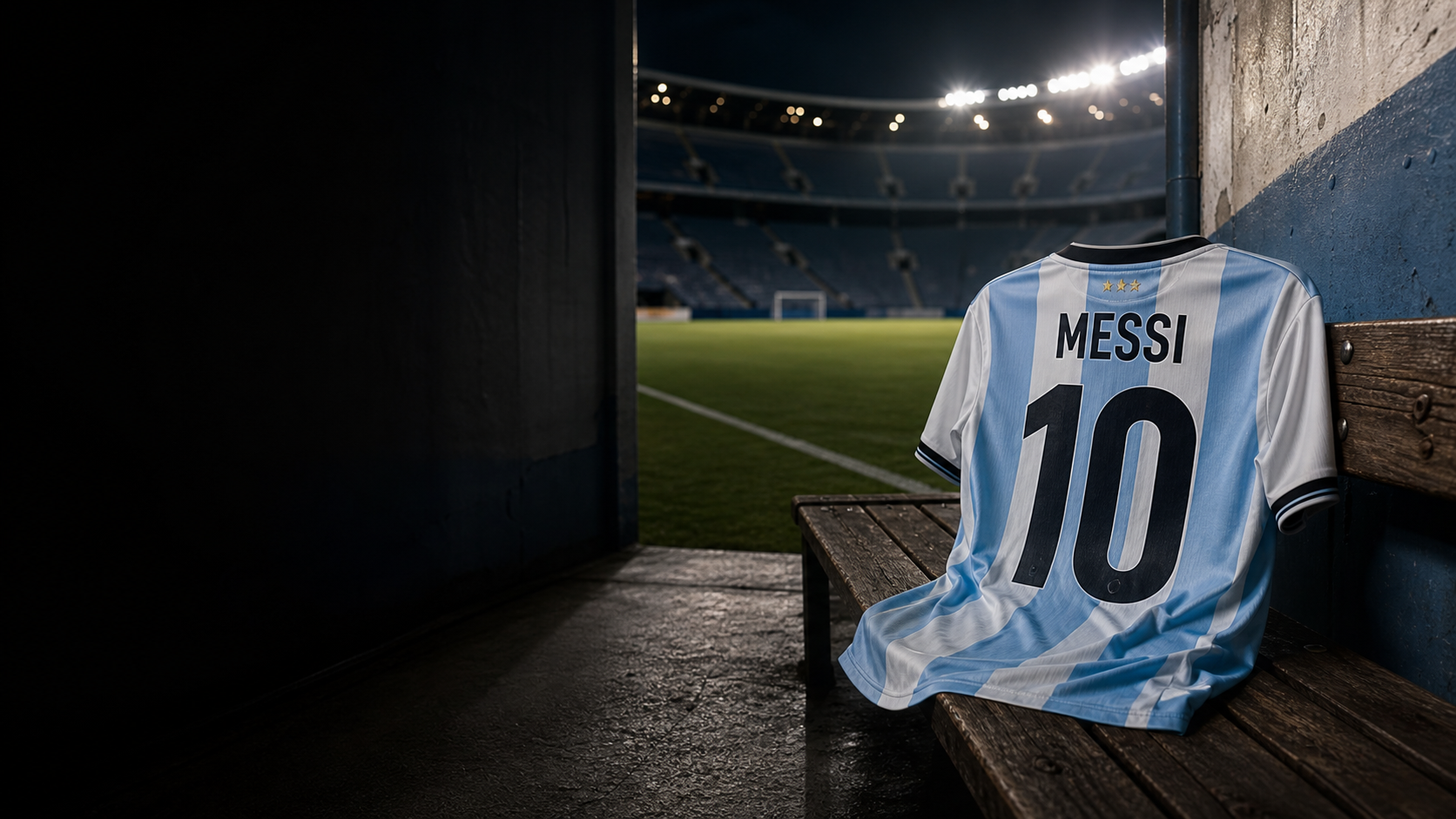
FIFA has never granted a member federation a permanent, guaranteed exemption to retire a squad number. What is being asked for here is not a rewrite of the numbering rules for anyone else, and not a bet on how a future roster happens to be filled out. It is a single, named exception: a permanent waiver, independent of squad size, letting Argentina file a World Cup squad list — whether it carries twenty-three players or twenty-six — that leaves the ten vacant for the number Messi wore, for good.
This is an independent supporters’ petition. It is not endorsed by, affiliated with, or authorized by Lionel Messi, the Argentine Football Association, or FIFA. Messi has never publicly commented on retiring the number, and no claim is made here about what he wants. This is a request from people who watched him wear it, addressed to the organization that decides who wears it next.
Sources (4)
- Argentina FA boss wants to retire Lionel Messi's No. 10 to honor World Cup winner once he calls it quits
- The Argentine national team will retire the number 10 jersey: a decision made one year after the World Cup victory
- FIFA approves 26-man squads for 2022 World Cup as teams will have three extra players in Qatar
- Regulations for the FIFA World Cup 26 (Article 29: Numbers and Names)